



The AFL season is a long and tough journey, but everything leads to one exciting month in September. The afl finals format is designed to reward the best teams while giving everyone in the top eight a fair shot at the trophy. If you have ever felt a bit confused by how teams move through the bracket, don’t worry. It is actually a very clever system once you see it broken down. In this guide, we will look at exactly what is the afl finals format and how it has stayed consistent over the last few years. Whether you are a new fan or a long-time supporter, understanding these rules makes every goal and every tackle feel much more important.
What is the AFL Finals Format?
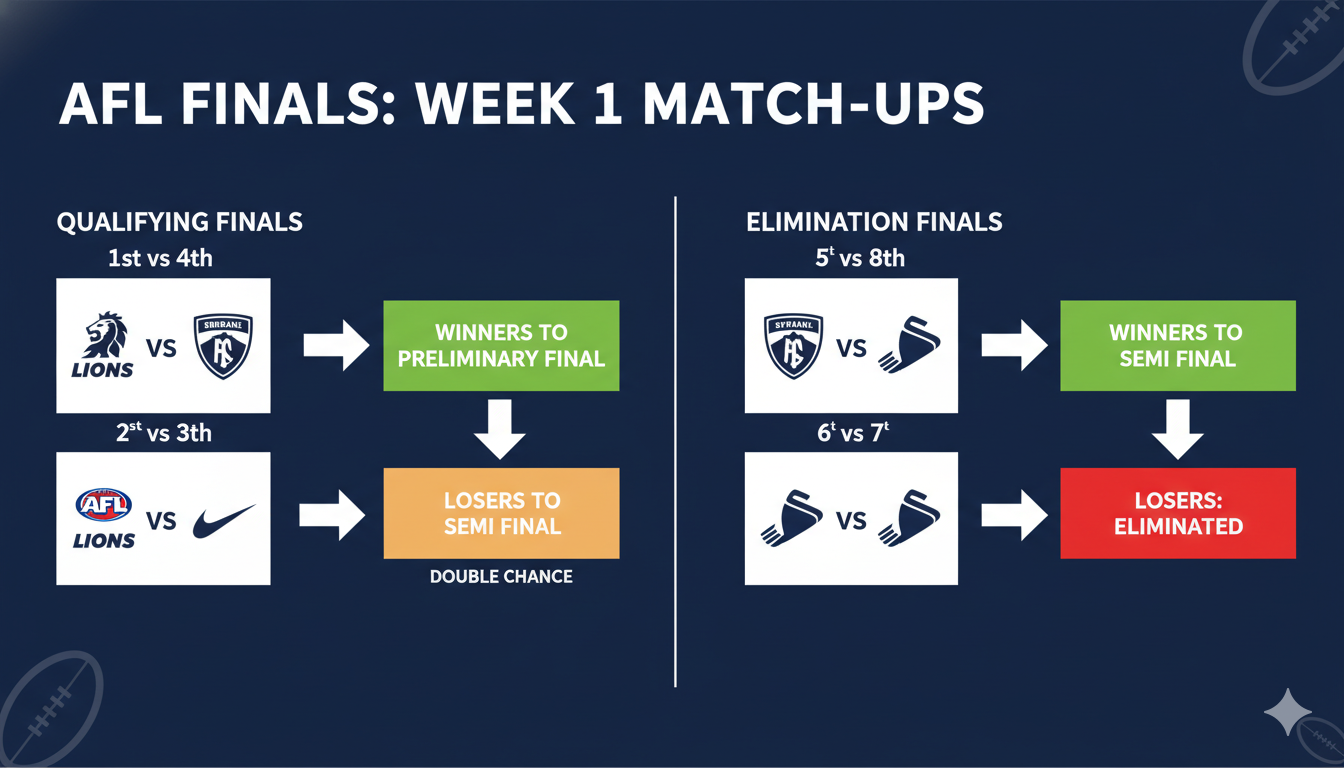
To put it simply, the afl finals format is a four-week tournament played by the top eight teams on the ladder. At the end of the home-and-away season, the teams ranked 1 through 8 qualify for the finals. The teams ranked 9 through 18 finish their season and start planning for next year. The “Final Eight” system is great because it gives the top four teams a “double chance.” This means if a top-four team loses their first game, they are not knocked out right away. However, for the teams in the bottom half of the bracket (5th to 8th), every single game is a “do or die” battle. One loss and their season is over.
How the Top Eight Teams are Decided
Before the afl finals format begins, teams play 23 games to earn points. A win gets you four points, and a draw gets you two. If teams have the same number of points, the AFL looks at “percentage.” This is a math calculation based on how many points a team scored versus how many they let the other teams score. Having a high percentage is like having an extra win in your pocket. It is very common for the 8th and 9th spots to be decided by just a tiny bit of percentage. This makes every single goal in the regular season very valuable for the final ladder.
Week One: The Qualifying and Elimination Finals
The first week of the afl finals format is where the real drama starts. There are four big games played. The teams that finished 1st, 2nd, 3rd, and 4th play in “Qualifying Finals.” The winners of these games get a week off and go straight to the Preliminary Finals in Week Three. The teams that finished 5th, 6th, 7th, and 8th play in “Elimination Finals.” In these games, the losers are out of the race immediately. It is a high-pressure weekend because the top teams want that week of rest, while the lower teams are fighting just to stay alive for one more week.
Looking Back at the AFL Finals Format 2020
The year 2020 was very strange for the whole world, and football was no different. Even though many games were moved to Queensland, the afl finals format 2020 stayed mostly the same as the traditional system. Richmond ended up winning the flag that year. The main difference was the length of the quarters, which were shorter because games were played closer together. Even with all the chaos of travel and hubs, the top-eight system proved it was strong enough to work under pressure. It showed fans that no matter where the games are played, the rules of the finals keep the competition fair and exciting.
A Review of the AFL Finals Format 2021
In 2021, we saw another amazing finish to the season. The afl finals format 2021 gave us a historic Grand Final played in Perth because of lockdowns in Melbourne. Melbourne Demons fans will never forget this year because they finally broke a very long premiership drought. The format worked perfectly to highlight the dominance of the top teams that season. We saw how important the “double chance” was for teams trying to manage injuries and travel. By the time the Grand Final arrived, the two best teams had survived a very difficult month of high-stakes football, proving the system finds the true champion.
Understanding the 2023 AFL Finals Format
Fast forward a little bit, and the 2023 afl finals format continued the tradition of thrilling September moments. Collingwood and Brisbane fought their way through the bracket to meet in one of the best Grand Finals in history. The 2023 season showed us that finishing in the top four is almost a requirement if you want to win it all. While teams from the bottom half of the eight can make a run, the physical toll of playing every single week is very hard. The afl finals format in 2023 was a perfect example of why teams try so hard to secure a home final and a second chance.
Why the Double Chance Matters So Much
In the afl finals format, the “double chance” is the biggest prize of the regular season. If a team finishes in the top four, they play a Qualifying Final. If they win, they are just one game away from the Grand Final. If they lose, they get to play again the next week against a winner from an Elimination Final. This safety net is huge because anyone can have a bad day. It allows a great team to make one mistake and still recover. For teams in 5th to 8th, there is no safety net. They must win four games in a row to take home the trophy, which is a very difficult mountain to climb.
The Semi-Finals: Week Two Explained
Week Two is often called the “rebound week.” The teams that won the Qualifying Finals are resting their bodies. The teams that lost the Qualifying Finals now have to play the winners of the Elimination Finals. These two games are called Semi-Finals. This is a dangerous time for the top-four teams who lost their first game. They are often tired or frustrated, while the teams coming up from the bottom have a lot of momentum. In the history of the afl finals format, we have seen many “upsets” during this week where a lower-ranked team knocks out a top-four giant.
The Preliminary Finals: The Last Hurdle
Week Three features the Preliminary Finals. This is widely considered the most intense weekend of the year. The winners of these two games go to the Grand Final, while the losers go home with nothing after a massive season. At this stage of the afl finals format, there are only four teams left. The teams that had the week off in Week Two usually have fresh legs, but they might be a bit “rusty.” The battle for a spot in the Big Dance is always fierce, and the atmosphere in the stadiums is unlike anything else in Australian sport.
The Grand Final: The Ultimate Goal
Everything in the afl finals format leads to the last Saturday in September (usually). Two teams enter the MCG, and only one leaves with the premiership cup. This is a winner-takes-all match. There are no second chances and no next weeks. The winner earns the right to be called the champions for the rest of history. Because the format is so tough, the team that wins the Grand Final has truly earned it. They have survived the pressure, the injuries, and the best efforts of every other team in the league.
Historical AFL Finals Success Table
| Year | Premier (Winner) | Runner-Up | Venue |
| 2023 | Collingwood | Brisbane Lions | MCG |
| 2022 | Geelong Cats | Sydney Swans | MCG |
| 2021 | Melbourne | Western Bulldogs | Optus Stadium |
| 2020 | Richmond | Geelong Cats | The Gabba |
| 2019 | Richmond | GWS Giants | MCG |
Why Fans Love the Current System
The current afl finals format is loved because it keeps the season alive for more fanbases. With eight teams making it, almost half the league has a chance when the finals start. It also makes the end of the home-and-away season very exciting. Teams are not just fighting to get into the eight; they are fighting to get into the top four for that double chance. This keeps the games meaningful right up until the final siren of the final round. It is a fair system that rewards consistency while allowing for the “fairytale” run from a lower-ranked underdog.
Conclusion
The afl finals format is a masterpiece of sporting competition. It combines the reward of a long season with the sudden-death excitement of a tournament. From the first bounce of the Qualifying Finals to the final siren of the Grand Final, it is a rollercoaster of emotions. Understanding how the bracket works makes you a smarter fan and helps you appreciate the strategy coaches use. So, grab your scarf, cheer for your team, and enjoy the best month of the year. Who do you think will master the format this year and take home the flag?
FAQs
1. How many teams make the AFL finals?
Exactly eight teams qualify for the finals based on their position on the ladder at the end of the regular season.
2. What happens if a finals game ends in a draw?
Unlike the regular season, a finals game cannot end in a draw. Teams will play periods of extra time until a winner is decided.
3. Has a team from outside the top four ever won the Grand Final?
Yes, but it is very rare. The Western Bulldogs in 2016 are the most famous example of a team winning from 7th place.
4. Where are the finals games played?
Usually, the team that finished higher on the ladder gets “home ground advantage,” meaning the game is played in their home city.
5. Why is the Grand Final usually at the MCG?
The MCG is the traditional home of Australian Rules Football and has a contract to host the Grand Final for many years because it holds 100,000 people.
6. Do teams get more money for making the finals?
Yes, clubs receive prize money and increased revenue from ticket sales and merchandise when they participate in the afl finals format.
Read more:Your Ultimate Guide to UL605: Everything About the Melbourne to Colombo Flight
