



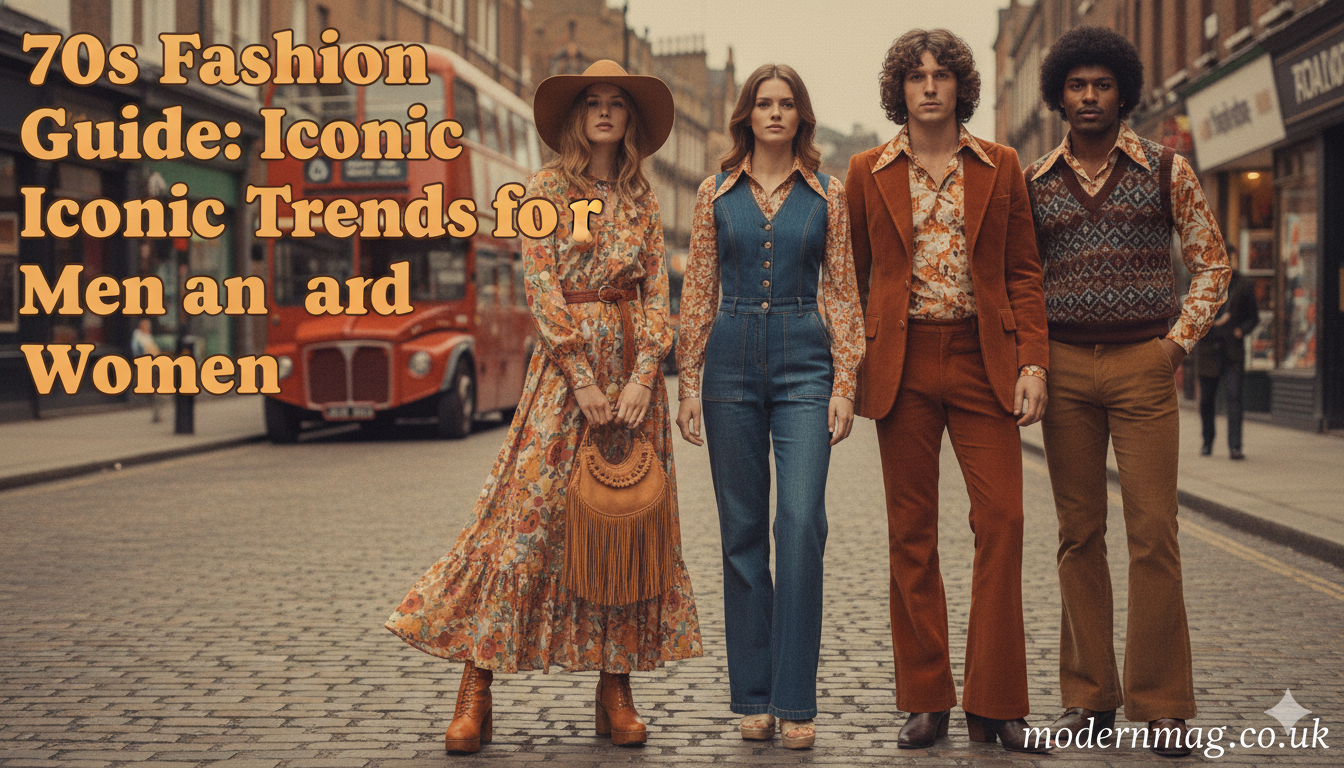
The 1970s was a decade of true self-expression and wild creativity. When we talk about 70s fashion, we are talking about a time when rules were broken and new styles were born every single day. People moved away from the stiff outfits of the past and embraced bright colors and comfortable fabrics. From disco floors to peaceful protests, the clothes people wore told a story of freedom. It was a golden age for anyone who loved to stand out in a crowd. You could see everything from sparkly jumpsuits to simple denim jeans on the street. This era proved that fashion is not just about clothes but about how you feel inside. Today, we still see these styles coming back to life on modern runways and in vintage shops.
The Rise of Disco and Glamour
The disco movement changed 70s fashion forever by bringing shine and shimmer to the mainstream world. Imagine walking into a room filled with neon lights and seeing people in satin pants and glittery tops. This was the peak of 70s fashion trends where looking bold was the only goal. Men and women both loved wearing high-waisted trousers that flared out at the bottom. These were often paired with platform shoes that added several inches to a person’s height. It was all about being noticed under the spinning disco ball. Silk shirts with long collars were also a huge hit during this exciting time. People spent hours getting ready to dance the night away in their best outfits.
Why 70s Fashion Ideas Still Matter
You might wonder why we still look back at 70s fashion ideas after all these years. The answer is simple because the style was built on the idea of being yourself. Whether you liked the hippie look or the rock and roll vibe, there was something for everyone. Designers today often look at old photos from the seventies to find inspiration for new collections. You can see modern versions of bell bottoms and tie-dye shirts in almost every clothing store now. Learning about this decade helps us understand how to mix colors and patterns in a fun way. It teaches us that fashion should be fun and never boring or too serious. Retro styles help us connect with a history that was full of energy and big changes.
Exploring 70s Fashion Women and Style
When looking at 70s fashion women, the variety of choices was truly amazing and very diverse. Some women preferred the “Boho” look with long flowy maxi dresses and flower crowns in their hair. Others chose to wear power suits with wide shoulders to show they were strong and independent. The wrap dress became a staple in many closets because it was easy to wear and looked great on everyone. High-waisted jeans paired with simple tucked-in t-shirts were perfect for a casual day out. Crochet tops and handmade vests also became very popular as people valued unique items. This era allowed women to experiment with different silhouettes like never before in history.
A Deeper Look at Womens 70s Fashion
The world of womens 70s fashion was not just about one single look or trend. It was a mix of many different cultures and styles coming together at once. You had the punk movement starting in London which brought ripped shirts and safety pins. At the same time, the California surf culture brought bright shorts and breezy shirts to the beaches. Many women started wearing jumpsuits which were both stylish and very practical for busy lives. Embroidery and lace details were added to denim jackets to give them a personal touch. Platform boots were the go-to footwear for almost every outfit during the middle of the decade. It was a time of transition where traditional skirts were often replaced by comfortable trousers.
Iconic Mens 70s Fashion Trends
If we shift our focus to mens 70s fashion, we see a massive change in how men dressed. Gone were the days of only wearing grey or black suits to every event. Men started wearing bright orange, deep green, and bold yellow colors in their daily lives. Leisure suits made of polyester became a massive trend because they were easy to wash and wear. These suits often had very wide lapels and matching pants that flared at the ankles. Men also grew out their hair and wore sideburns to match their rugged or polished looks. Patterned button-down shirts were worn open at the neck to show off gold chains. It was a brave time for men to explore their personal style without fear.
The Bold World of 70s Fashion Men
Looking closely at 70s fashion men shows us that comfort was just as important as looking cool. Tracksuits became popular for the first time as people started focusing more on fitness and health. Denim was a huge part of the wardrobe with “double denim” becoming a common sight on the streets. Men wore tight-fitting shirts to show off their physique along with wide leather belts. The influence of rock stars like David Bowie and Mick Jagger made flashy clothes very acceptable. Even at work, the office attire became a bit more relaxed compared to the decades before. Leather jackets were also a must-have item for anyone who wanted to look a bit edgy. This era redefined what it meant to be a fashionable man in a modern world.
Popular Fabrics Used in the Seventies
The materials used in 70s fashion were often just as bold as the designs themselves. Polyester was the king of fabrics because it stayed smooth and did not wrinkle easily. People also loved wearing corduroy which had a unique texture and kept them warm during winter. Velvet was used for fancy evening wear to give a touch of luxury to the outfits. Denim became a symbol of the youth and was used for everything from hats to bags. Suede and leather were also very common for jackets and boots throughout the whole decade. These fabrics allowed for bright dyes and wild prints that defined the visual style of the era. Understanding these materials helps us appreciate the craft behind vintage clothing pieces.
Accessories That Defined the Era
No 70s fashion outfit was complete without the right accessories to tie everything together. Oversized sunglasses with tinted lenses were worn by almost everyone regardless of the weather. Wide-brimmed hats were perfect for adding a bit of mystery and style to a simple dress. Thick belts with large buckles were used to cinch the waist and create a nice shape. Jewelry was often big and chunky with lots of wooden beads and natural stones. Bandanas and headscarves were used to keep hair in place while adding a pop of color. Even socks were colorful and often pulled up high when wearing shorts. These small details were what made the 70s look so iconic and memorable.
How to Style a 70s Look Today
If you want to try 70s fashion today, you do not have to wear a full costume. You can start by picking one vintage piece like a pair of flared jeans or a floral shirt. Mix these old-school items with your modern clothes to create a balanced and fresh look. For example, a 70s-style vest looks great over a simple white t-shirt and skinny jeans. You can also look for patterns like paisley or stripes to give a nod to the past. High-waisted trousers are very trendy right now and easy to find in most clothing stores. Adding a pair of platform sneakers can give you that extra height without the discomfort of old boots. It is all about having fun and finding what makes you feel confident.
The Influence of Music on Style
Music played a massive role in shaping 70s fashion trends across the entire world. Bands and singers were the ultimate fashion icons that everyone wanted to copy and follow. When a rock star wore a certain type of cape or boot, fans would rush to find something similar. The punk scene brought a rebellious spirit to fashion with leather and metal studs. Reggae music introduced earthy tones and knit caps to the global fashion scene. Folk singers made simple denim and cotton shirts look cool and approachable for the average person. You could tell what kind of music someone liked just by looking at their clothes. This connection between sound and style is what made the decade so culturally rich.
Biography Table: Icons of the 70s
| Name | Occupation | Known For | Fashion Impact |
| Cher | Singer/Actress | Variety Shows | Bob Mackie gowns, Midriff tops |
| David Bowie | Musician | Ziggy Stardust | Androgynous style, Glitter, Spandex |
| Farrah Fawcett | Actress | Charlie’s Angels | The “Farrah” Flip hair, Red swimsuits |
| Diane von Furstenberg | Designer | Fashion Mogul | Inventing the Wrap Dress |
| Mick Jagger | Singer | The Rolling Stones | Jumpsuits, Skinny scarves, Velvet |
| Stevie Nicks | Musician | Fleetwood Mac | Flowy skirts, Shawls, Top hats |
Conclusion
In the end, 70s fashion remains a favorite because it represents a time of joy and discovery. It was a decade where people stopped trying to fit in and started trying to stand out. Whether you love the glitter of disco or the simplicity of denim, there is a piece of the 70s for you. The fashion of that time reminds us to be brave with our choices and to wear what we love. As we look at old photos, we see a world full of color, movement, and very big smiles. It is a style that will never truly go away because it is based on the human spirit. So, go ahead and embrace some vintage vibes in your own wardrobe today.
(FAQs)
What was the most popular item in 70s fashion?
Bell-bottom jeans were likely the most iconic item of the decade. Almost everyone, regardless of age or gender, owned at least one pair of these flared trousers.
Can I wear 70s fashion to work?
Yes, you can! Try wearing high-waisted trousers or a nice wrap dress. These items are professional but still give a subtle nod to the 70s style.
What colors were common in 1970s clothing?
The era was known for “earth tones” like harvest gold, burnt orange, and avocado green. However, neon colors and bright glitters were also very popular during the disco years.
Were 70s clothes comfortable?
Mostly, yes! The move toward polyester and loose-fitting “Boho” styles made many 70s outfits much more comfortable than the structured clothes of the 1950s.
What shoes did people wear in the 70s?
Platform shoes were the biggest trend for both men and women. For a more casual look, people often wore simple leather sandals or classic canvas sneakers.
Did men wear jewelry in the 70s?
Yes, men often wore gold chains, large rings, and leather wristbands. It was a time when men felt more free to use accessories to enhance their personal look.
